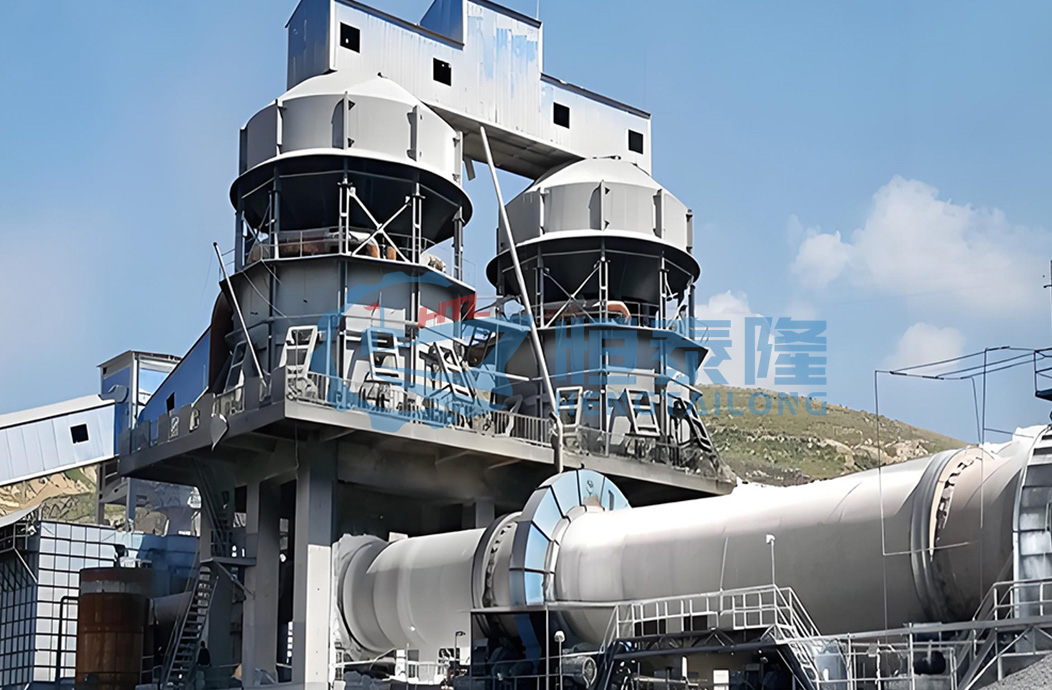
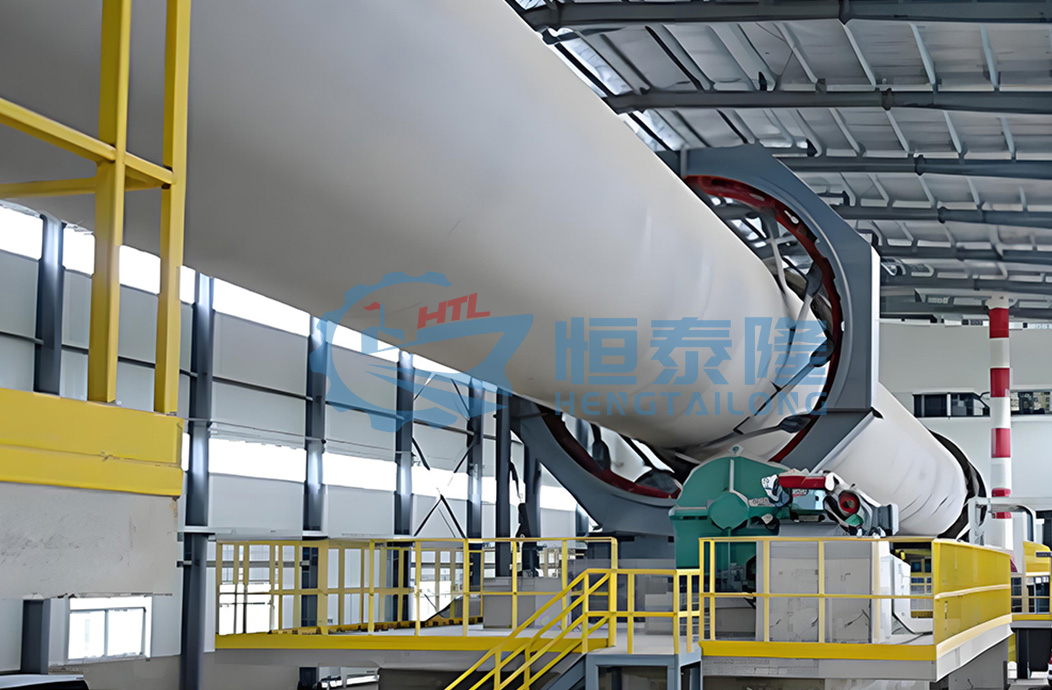
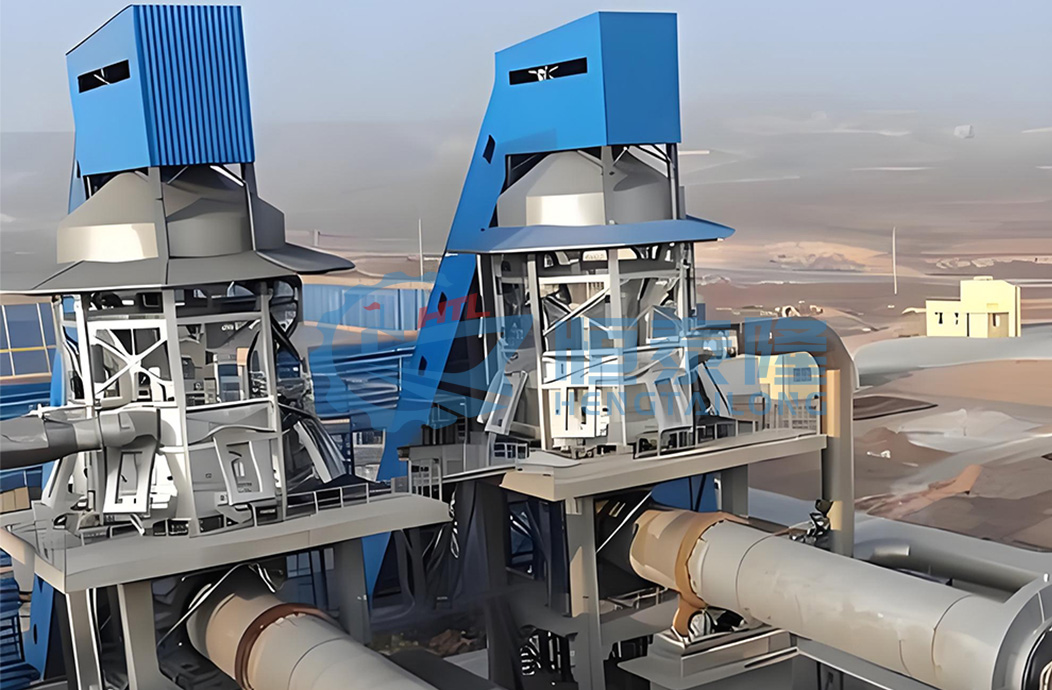
Rotary kiln, also called rotary calcination kiln, is a slightly inclined rotating cylindrical heat treatment furnace. It can cause chemical reactions or phase changes by continuously calcining or sintering solid materials.
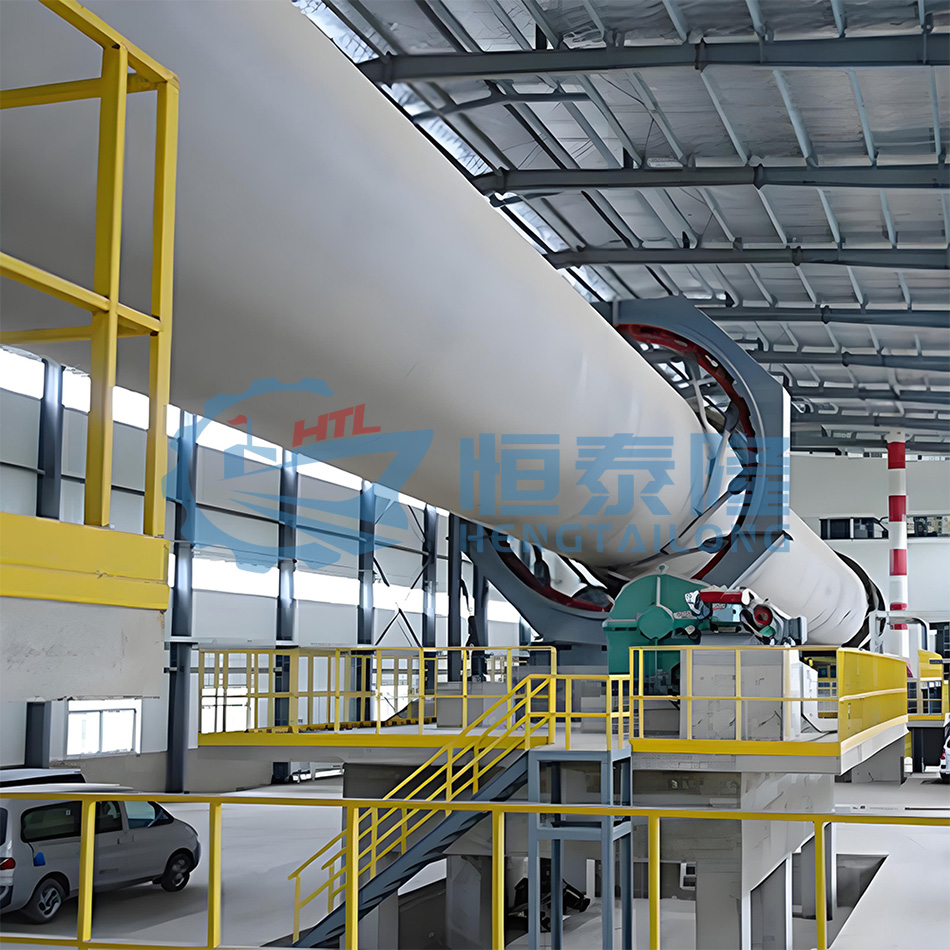
The zinc oxide roasting system uses a rotary kiln. The mixed materials are transported to the feeding chamber of the rotary kiln through a hoist, and then fed into the rotary kiln. The materials roll and move inside the kiln for roasting, which is divided into three stages: preheating, roasting reaction, and cooling. The material entering the kiln is rapidly heated in the preheating zone at the kiln tail, with a temperature controlled between 650-850 ℃. The temperature of the roasting reaction zone is controlled between 1100-1250 ℃. In this reaction zone, the zinc oxide in the material will be first reduced to zinc vapor by carbon or carbon monoxide and enter the gas phase. It will then enter the flue gas cooling section from the kiln head with the airflow inside the kiln, and be oxidized to zinc oxide by oxygen or carbon dioxide in the gas phase. Finally, it will be collected in a bag filter. The temperature of the cooling zone at the kiln head is controlled at 950 ℃. The roasted materials are discharged into the kiln head water tank for cooling.
The flue gas generated from roasting enters the U-shaped cooling pipe from the settling chamber at the kiln tail for further cooling, and finally reaches the bag dust collection chamber to complete product collection. The zinc oxide product is collected, and the exhaust gas is sent to the desulfurization reactor and desulfurization tower for treatment by the induced draft fan before being discharged.
The cooler reduces the temperature of zinc vapor into zinc dust and also plays a settling role, ensuring that the inlet temperature of the dust collector is less than 200 ℃.
After being discharged from the kiln head, the roasted material enters the water-cooled pool and is temporarily stored in the yard by being scooped up by a grab bucket. Due to the fact that most of the zinc (~80%) in the raw materials has been extracted, the remaining roasted material mainly consists of metallic iron and enters the rod mill magnetic separation process.
According to the principle of "protecting the environment and conserving energy", and based on our company's existing technical experience, we have comprehensively considered the selection of technical processes and production equipment to achieve the current advanced level in China.
Production process: Extracting zinc oxide from low zinc content materials and recovering valuable metals. Currently, the most economical and popular method is the rotary kiln reduction volatilization method.
| Product Specification(m) | Kiln dimensions | Motor power(kw) | Total weight(t) | |
| Capacity(t/d) | Rotation speed(r/min) | |||
| Φ2.5×40 | 180 | 0.44-2.44 | 55 | 149.61 |
| Φ2.5×50 | 200 | 0.62-1.86 | 55 | 187.37 |
| Φ2.7×42 | 320 | 0.10-1.52 | 55 | 198.5 |
| Φ2.8×44 | 450 | 0.437-2.18 | 55 | 201.58 |
| Φ3.0×45 | 500 | 0.5-2.47 | 75 | 210.94 |
| Φ3.0×48 | 700 | 0.6-3.48 | 100 | 237 |
| Φ3.2×50 | 1000 | 0.6-3 | 125 | 278 |
| Φ3.3×52 | 1300 | 0.266-2.66 | 125 | 283 |
| Φ3.6×70 | 1800 | 0.25-1.25 | 125 | 419 |
| Φ4.0×56 | 2300 | 0.41-4.07 | 315 | 456 |
| Φ4.0×60 | 2500 | 0.396-3.96 | 315 | 510 |
| Φ4.3×60 | 3200 | 0.396-3.96 | 375 | 583 |
| Φ4.5×66 | 4000 | 0.41-4.1 | 560 | 710.4 |
| Φ4.7×74 | 4500 | 0.35-4 | 630 | 849 |
| Φ5.0×74 | 6000 | 0.35-4 | 710 | 944 |
| Φ5.6×87 | 8000 | Max4.23 | 800 | 1265 |
| Φ6.0×95 | 10000 | Max5 | 950×2 | 1659 |